

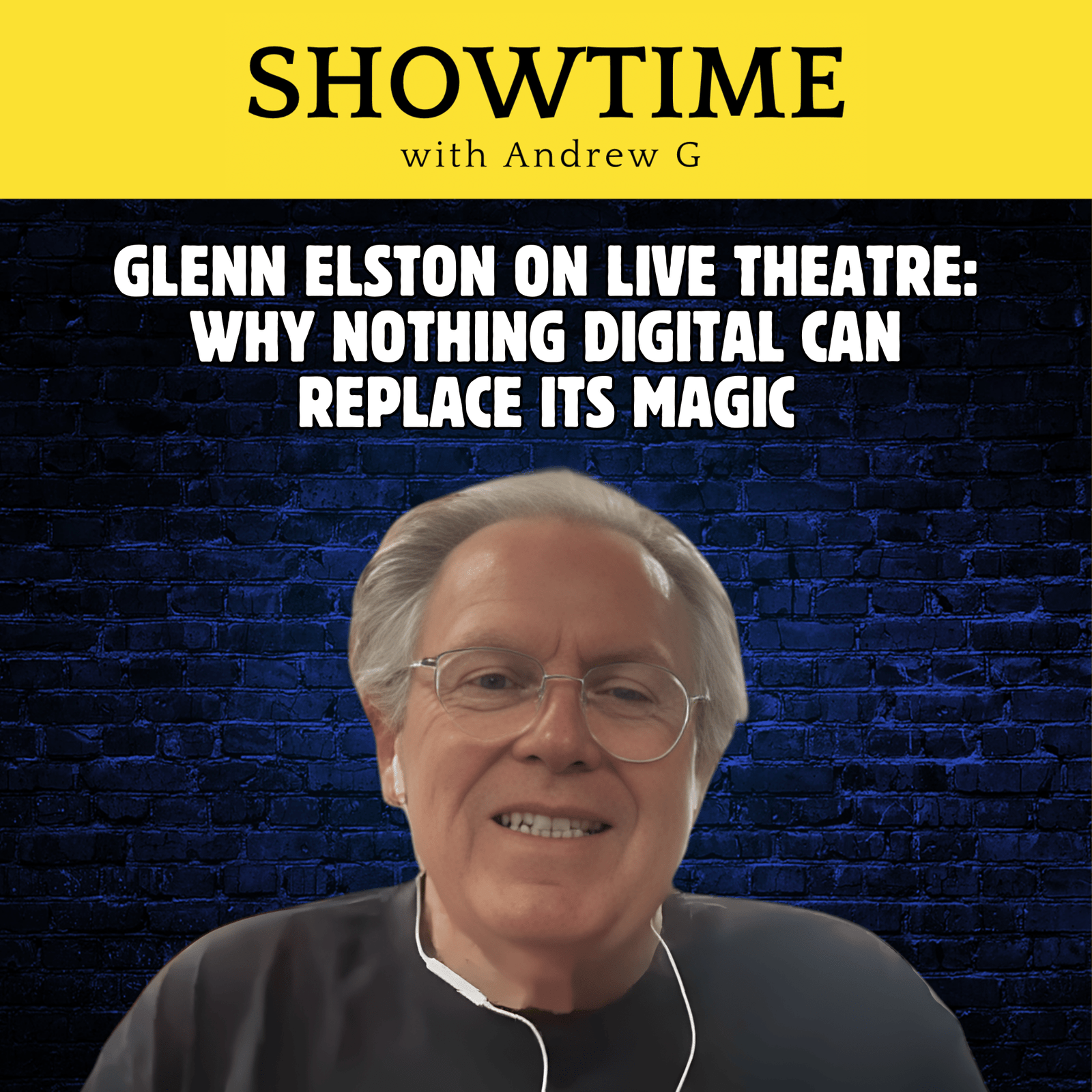
Meet Glenn Elston, and you quickly understand why live theatre continues to captivate. As Artistic Director of the Australian Shakespeare Company, Glenn’s life has been shaped by discovery, curiosity, and a deep belief in the power of storytelling to connect people. His decades in theatre aren’t defined by reaching a destination or ticking boxes, but by the constant unfolding of new insights, both on stage and off. For him, each production is an opportunity to explore human nature, to bring communities together, and to remind audiences why theatre still matters in a world overflowing with screens and instant entertainment. Sitting down with him, you sense a contagious enthusiasm that doesn’t just linger on the art itself, but radiates into the experience of everyone involved—from actors and designers to the families laughing under the trees.
Glenn’s journey with Shakespeare has never been about mastery in the conventional sense. Each play is less a challenge to conquer and more a lens through which to view the world, a mirror reflecting the complexities of human behaviour. Returning to the same texts across years has allowed him to uncover nuances that can surprise even the most seasoned theatre-maker: the subtle ways power manifests, the fleeting moments of kindness that alter a story, the folly and humour that reveal so much about human contradiction. It’s this sense of perpetual discovery that energises his work and defines the ethos of the Australian Shakespeare Company. Under Glenn’s guidance, the company has expanded from a small ensemble into Australia’s largest independent theatre company, yet it has never lost its sense of playfulness, generosity, or curiosity. The philosophy that theatre should grow as the artists and audiences grow is embedded in every production, every rehearsal, and every interaction with the public.
At the heart of this philosophy is a deeply communal approach. Glenn’s work often unfolds in the most unexpected of settings: the sun-dappled expanses of Melbourne’s Royal Botanic Gardens. There, audiences gather for summer seasons that feel as much like a festival as a series of performances. Overlapping productions such as Twelfth Night, Shakespeare’s Best Bits, and the enduring Wind in the Willows—celebrating its 39th year—create a rhythm of creative intensity. Add to that children’s fairy shows, live music, and a sprinkling of international touring, and it becomes clear that the physical and mental demands are enormous. Yet Glenn talks about this exhaustion with a peculiar affection. It’s the kind of tiredness that comes from giving your whole self to something you love, from collaborating with an ensemble where every person’s effort contributes to a fleeting but unforgettable moment on stage. He emphasises that theatre is inherently collaborative, a collective endeavour where success is measured not by individual accolades but by shared experience. Every season, every show, is a reminder that it takes a village: performers, technicians, producers, and crew all working in concert to make something ephemeral, magical, and profoundly human.
One of the most defining elements of Glenn’s approach is his commitment to outdoor theatre, which fundamentally reshapes the relationship between performer and audience. Without walls or a ceiling, performances acquire a different rhythm. Audiences are free to breathe, to stretch, to move; performers must respond to the unpredictability of light, wind, and even rain. Glenn describes how the unpredictability of the environment becomes part of the story itself. A sudden shower, a gust of wind, or the rustle of leaves in the trees is not a distraction, but a collaborator, challenging actors to adapt in real time and creating an intimacy that is impossible within the confines of a traditional theatre. The connection formed in these moments is electric: the shared commitment of everyone present—performers and audience alike—to remain present, to laugh, to gasp, to feel—is transformative.
Children chasing characters through the gardens, families settling on picnic blankets as twilight deepens, and the gentle rustle of leaves against the backdrop of a Shakespearean soliloquy are more than just charming visuals; they are central to Glenn’s vision. He believes theatre achieves its greatest impact when it invites people in, not just to watch, but to participate in a shared experience that is at once fleeting and enduring. These moments capture the joy, generosity, and curiosity that have always guided his career, reminding us that live performance remains vital because it is communal, responsive, and alive in a way that no screen can replicate.
Glenn’s reflections extend beyond the practicalities of production into the heart of what makes theatre necessary. In a society increasingly mediated by technology and convenience, theatre offers an irreplaceable space for empathy, reflection, and connection. It is a place where stories breathe, where characters embody the contradictions of human existence, and where audiences are invited to engage deeply, even uncomfortably, with ideas and emotions that might otherwise remain abstract. His work demonstrates that theatre is not merely entertainment—it is a living, breathing forum for understanding, laughter, and human growth. It is both a mirror and a lamp, illuminating the world and reflecting our place within it, and in Glenn’s hands, it does so with warmth, rigour, and unrelenting curiosity.
For anyone fortunate enough to witness a production under Glenn’s guidance, the experience is more than performance; it is an invitation. It is an invitation to wonder, to question, to laugh, and to be moved. It is a reminder that theatre, despite centuries of change, remains an art form uniquely capable of forging connections, fostering imagination, and celebrating the simple, profound joy of shared human experience. Glenn’s story is a testament to the enduring power of live performance and a reminder that in a world of endless screens and instant gratification, the act of coming together to witness and participate in a story still matters, perhaps now more than ever.
