

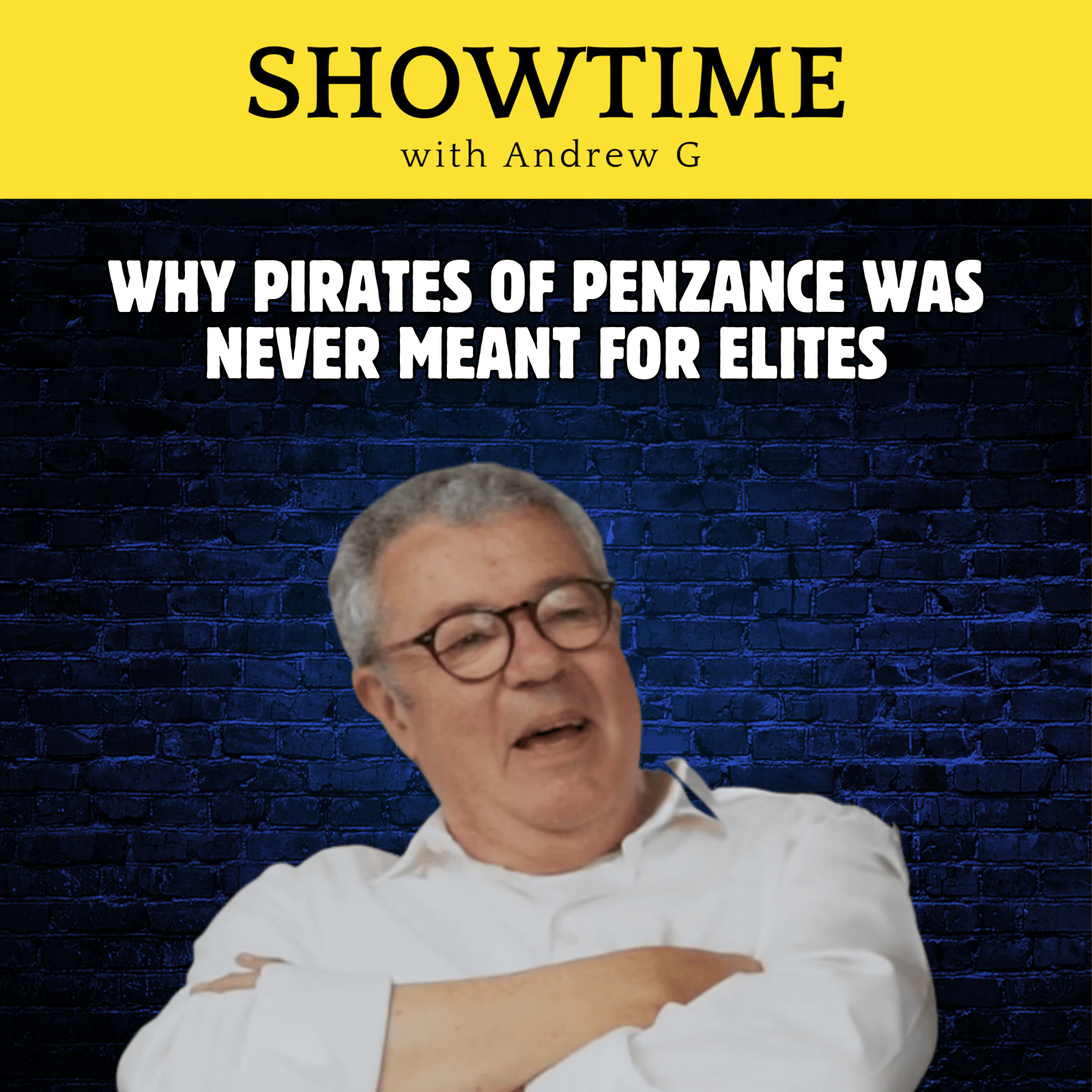
Every now and then, a conversation about theatre comes along that quietly reshapes your assumptions about an entire art form. In this discussion, Andrew sits down with Stuart Maunder, Artistic Director of Victorian Opera, to explore The Pirates of Penzance. What emerges is not a reverent examination of opera as something distant or elite, but a warm, thoughtful reflection on joy, humour, and the deeply human connections that live performance can create. Rather than focusing on prestige or tradition, the conversation leans into something far more immediate and relatable: laughter shared across a room, the thrill of music, and the simple pleasure of a great night at the theatre.
For Stuart, theatre has never been something abstract or intellectual—it has always been something felt. His connection to it began early, shaped by childhood experiences that were rich with spectacle and imagination. Productions filled with smoke, colour, transformation, and music captured his attention and refused to let go. Watching shows like The Wizard of Oz as a child wasn’t just entertaining; it was formative. These early encounters weren’t about understanding artistic rules or appreciating refinement. They were about wonder. They created a sense that theatre was a place where anything could happen, where stories could come alive in vivid and unexpected ways. That sense of openness has stayed with him, influencing not only his career but his philosophy on what theatre should be—welcoming, engaging, and accessible to anyone willing to step inside.
That perspective is particularly evident in his long-standing relationship with The Pirates of Penzance. Rather than being a piece he has simply revisited out of habit, it is one that continues to evolve for him with each production. Over the years, he has encountered it in different contexts, from amateur performances to large-scale professional stagings, and each time it reveals something new. What makes the work so enduring is its ability to balance seemingly opposing qualities. It is playful and absurd, yet also sincere and emotionally resonant. One moment it invites laughter, the next it offers something unexpectedly touching. This duality is part of its charm, allowing audiences to engage with it on multiple levels without ever feeling overwhelmed or excluded.
Inside the rehearsal room, that sense of energy and discovery becomes even more pronounced. Stuart speaks candidly about the nerves that come with directing, even after years of experience. That mix of excitement and uncertainty is not something he tries to avoid; rather, it is part of what keeps the process alive. Working with a combination of seasoned performers and emerging talent creates a dynamic environment where ideas can be tested and reimagined. Younger artists, in particular, bring a kind of fresh enthusiasm to the material, often encountering Gilbert and Sullivan’s work for the first time. Their curiosity and openness infuse the production with a sense of immediacy that carries through to the audience. Combined with a full orchestra and a visually playful, almost cartoon-like design, the goal is clear: to create an experience that feels vibrant, engaging, and genuinely enjoyable.
Part of what allows The Pirates of Penzance to resonate across generations is its humour. Despite being written more than a century ago, it continues to make people laugh, and not out of nostalgia, but because it still works. The wit of Gilbert and Sullivan is rooted in a kind of playful logic that gently turns expectations on their head. It doesn’t rely on heavy satire or complex references; instead, it finds humour in absurdity, timing, and character. Beneath that humour, however, lies something more profound. The music carries emotion in a way that bypasses analysis, connecting directly with the audience. It allows people to feel something instinctively, without needing to interpret or decode what is happening on stage. This immediacy is one of opera’s greatest strengths, even if it is often overlooked.
A significant part of Stuart’s mission is to challenge the lingering perception that opera is inaccessible or reserved for a select few. Historically, works like The Pirates of Penzance were created for broad audiences, designed to entertain and engage rather than intimidate. The idea that opera is only for those with specialised knowledge is, in many ways, a modern misconception. Stuart reframes it in simpler terms: it is storytelling driven by music and emotion. It is not something that requires expertise to appreciate, but rather something to be experienced openly. His approach is refreshingly direct—he encourages people to set aside their assumptions and simply give it a go.
Ultimately, what matters most is not what audiences think about the performance in an analytical sense, but how they feel when they leave. When asked what he hopes people take away from the experience, Stuart’s response is immediate and unpretentious. He wants them to feel as though they have had a fantastic night. Not necessarily educated or impressed in a formal sense, but uplifted, energised, and genuinely glad they came. That sense of satisfaction, of having shared in something joyful and communal, is at the heart of what theatre can offer.
This conversation becomes, in many ways, a celebration of those qualities. It highlights the power of laughter, the importance of generosity in storytelling, and the value of creating spaces where audiences feel included rather than excluded. It serves as a reminder that some of the most impactful art is not the most complex or intellectually demanding, but the kind that embraces sincerity and playfulness. There is something quietly powerful in a production that is willing to be both silly and heartfelt, that invites audiences to relax and enjoy themselves without expectation.
In the end, if people walk out of the theatre smiling, perhaps humming a tune, and feeling just a little lighter than when they arrived, then the performance has succeeded. That sense of shared joy is not just a by-product of the experience; it is the very reason it exists.
