

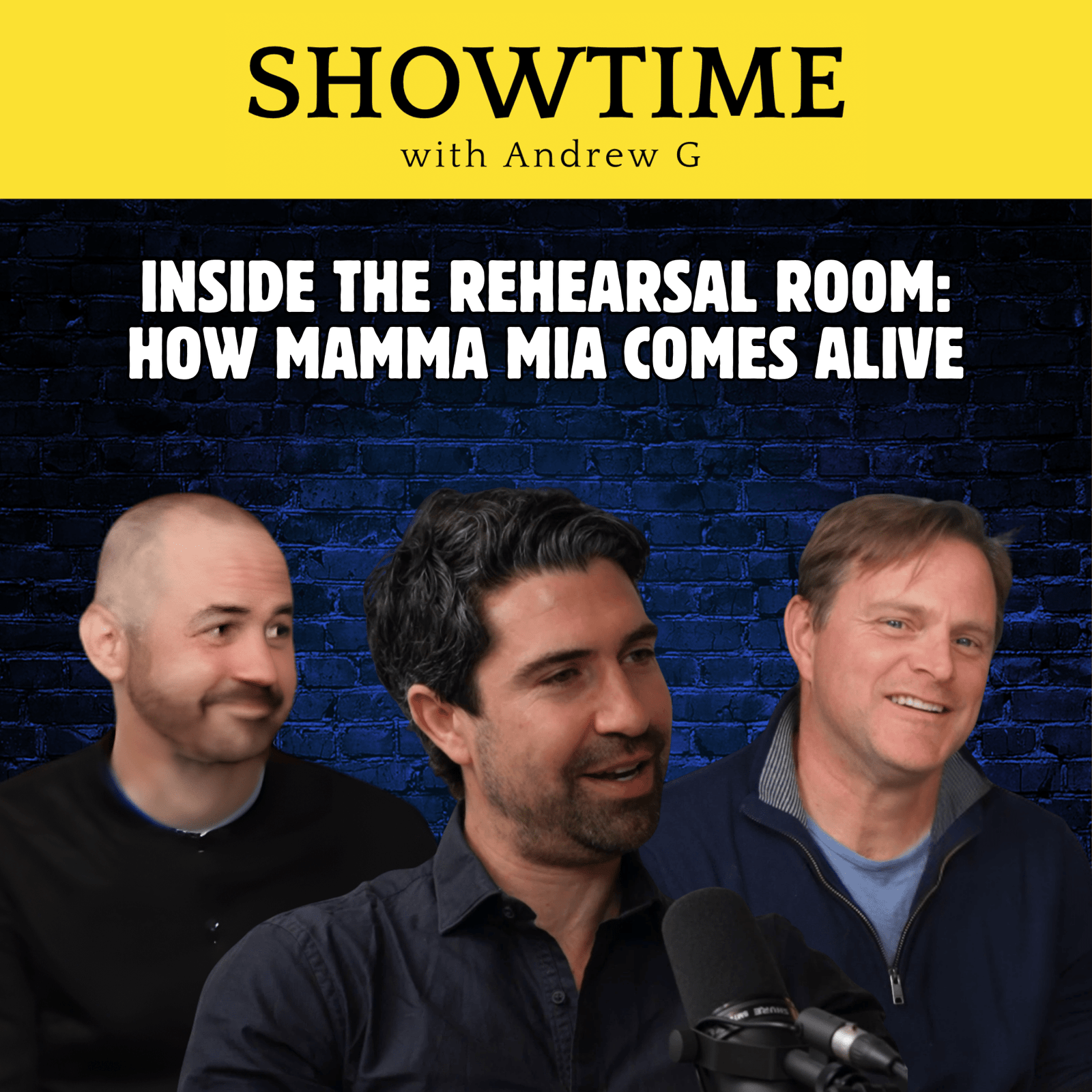
Every now and then, a conversation about theatre cuts through the noise and reminds you why live performance continues to matter. In a recent episode of Showtime, Andrew sits down with Sam Anderson, Shannon Foley, and Luke Stevens as they prepare to bring Mamma Mia to the National Theatre in February 2026. What unfolds isn’t simply a chat about a well-loved musical, but a thoughtful reflection on connection, authenticity, and the subtle responsibility performers carry every time they step on stage. Beneath the laughter and anticipation lies a deeper understanding of what it means to create something that genuinely moves people.
At its heart, theatre has never just been about technical precision or delivering lines on cue. For Sam, Shannon, and Luke, it’s about something far more human—helping audiences see themselves reflected in the stories unfolding before them. When people recognise fragments of their own lives, relationships, and emotions in a performance, the experience shifts. It stops being passive entertainment and becomes something shared, something personal. That recognition fosters a sense of connection that lingers well beyond the final curtain.
There’s also an awareness among the cast that this connection comes with a level of responsibility. Being part of a production like Mamma Mia isn’t only about enjoying the spotlight; it’s about honouring the story and delivering it with honesty. They speak openly about how easy it can be to underestimate the impact theatre has on audiences, particularly with a show that leans so heavily into joy. Yet, even the most light-hearted production can leave a meaningful imprint, offering comfort, perspective, or simply a much-needed escape. In that sense, every performance carries weight, even if it feels effortless on the surface.
As rehearsals ramp up, the energy in the room is described as both electric and relentless. Time seems to compress, with weeks disappearing in what feels like days. There’s a sense that everything accelerates as opening night approaches, bringing with it a mix of excitement and pressure. Despite this, there’s also a strong element of play that defines the rehearsal process. The cast speak about how quickly they’ve bonded, how trust has formed, and how professionalism actually creates the freedom to experiment and enjoy the work.
This particular production allows space for that kind of organic development. Rather than being tightly confined to a rigid blueprint, there’s room to explore character dynamics and discover moments that feel fresh and authentic. That balance between structure and spontaneity is where the magic often happens. It enables performers to stay grounded in the material while still bringing something uniquely their own to the stage. The result is a performance that feels alive rather than rehearsed, something audiences can instinctively sense.
Of course, no discussion of Mamma Mia would be complete without acknowledging the music that drives it. ABBA’s catalogue is more than just a backdrop—it’s the engine of the entire show. The cast speak about its immediate, almost universal appeal. Even those who didn’t grow up with the music find themselves swept up in its rhythm and energy. There’s something undeniably infectious about it. It invites movement, encourages participation, and creates an atmosphere that extends beyond the stage into the audience.
At the same time, the music presents its own set of challenges. Performing live vocals throughout a high-energy show leaves little room to rest. The production runs like a well-oiled machine, with constant movement, quick changes, and an ongoing demand for vocal precision. It’s physically and mentally demanding, requiring each performer to remain fully engaged from start to finish. What stands out, though, is the sense of collective responsibility that comes with that intensity. Every role contributes to the overall experience, reinforcing the idea that theatre is, above all else, a team effort.
As the conversation deepens, the cast begin to reflect on their individual journeys into the world of performance. Each path is different, shaped by distinct experiences and challenges. Sam speaks about his training and the importance of understanding intention—knowing why a character says what they say and does what they do. For him, that clarity is what transforms a performance from competent to compelling. Shannon reflects on her background in opera, describing how classical training provided a technical foundation that now allows her to perform with greater confidence and freedom.
Luke’s journey, on the other hand, is marked by setbacks and resilience. He speaks candidly about rejection and the lessons that come with it, reframing those experiences as opportunities for growth rather than failures. There’s a sense that each obstacle has contributed to where he is now, shaping both his perspective and his approach to the craft. Returning to Mamma Mia in a new role carries emotional significance, particularly as he considers the legacy of those who have performed in the show before him. It’s a reminder that theatre is both personal and collective, rooted in tradition while constantly evolving.
What becomes clear through these stories is that there’s no single path into theatre. Success isn’t defined by a straight line or a predictable trajectory. Instead, it’s built on persistence, curiosity, and a willingness to keep turning up, even when things don’t go to plan. That mindset is echoed in the advice they share, which feels grounded and genuine rather than rehearsed. There’s an emphasis on patience, on resisting the urge to rush the process, and on valuing collaboration over competition.
The enduring appeal of Mamma Mia ultimately comes down to its ability to balance joy with sincerity. It’s a show that doesn’t take itself too seriously, yet never feels hollow. There’s humour, warmth, and a genuine emotional core that resonates across generations. The cast describe it as something akin to comfort food—familiar, uplifting, and consistently satisfying. Audiences leave feeling lighter, often still humming the songs or replaying moments in their minds.
In a world that can often feel overwhelming, that sense of shared joy holds real significance. Theatre offers a space where people can step away from their daily lives and immerse themselves in something collective and uplifting. It’s not about escapism in the shallow sense, but about reconnecting with emotions that can sometimes get lost in the routine of everyday life.
By the end of the conversation, what lingers isn’t just excitement for the upcoming production, but a renewed appreciation for what theatre can offer. It’s about more than entertainment. It’s about connection, storytelling, and the quiet impact of making people feel seen. Mamma Mia doesn’t ask much of its audience, but it gives a great deal in return. And if people leave the theatre smiling, a little lighter than when they arrived, then it’s done exactly what it set out to do.
