

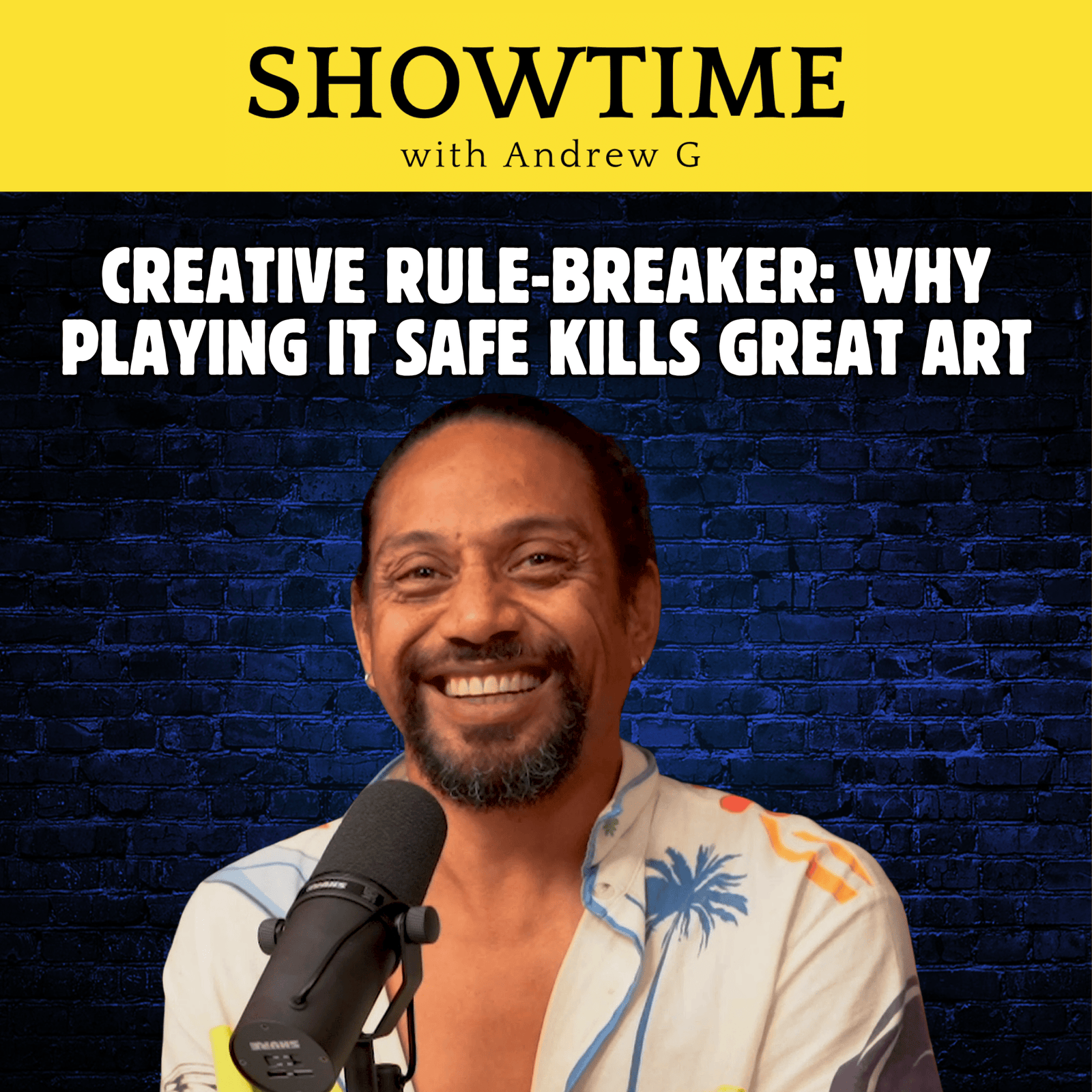
There’s something quietly powerful about hearing a performer say they’re not chasing applause—they’re chasing impact. Not the kind you measure in claps or ticket sales, but the kind that lingers in someone’s mind long after the curtain drops. It shifts how you see entertainment entirely.
In this episode of Showtime, Andrew G sits down with FEZ FAANANA, the creative force behind Briefs Factory. What unfolds isn’t just a conversation about cabaret or performance. It’s a deeper look into identity, risk, and what it really means to create something that moves people.
Fez doesn’t describe his work in neat categories. It’s circus, drag, burlesque, comedy—wrapped in theatre and layered with energy that feels almost unpredictable. But underneath all of that is intention. For him, performance isn’t about fitting into a box. It’s about creating space. Space for people to feel, to question, to engage, and sometimes, just to escape for a moment.
What makes his perspective compelling is where it comes from. Growing up between two worlds—his Samoan heritage and a Western upbringing—he became familiar with what it feels like to stand out. Not always comfortably. Not always proudly. Sometimes it was confusing, even isolating. But over time, those differences stopped feeling like something to hide and started becoming something to use.
As a kid, those moments showed up in small, everyday ways. Opening a lunchbox that looked different from everyone else’s. Explaining parts of his culture that others didn’t understand. Feeling both pride and embarrassment at the same time. It wasn’t a single experience—it was a mix of emotions that kept shifting. And without realising it, he was learning how to navigate complexity early on.
That complexity became a kind of foundation. Because when you grow up aware that you don’t quite fit into one mould, you start to question the mould itself. You become more comfortable bending rules, blending ideas, and creating something that doesn’t need to be easily defined.
Fez talks about performance as more than just being on stage. It’s about reading a room. Understanding energy. Knowing when to push, when to pull back, and when to completely shift the atmosphere. It’s an instinct he developed over time, not something he consciously set out to learn. But once he recognised it, it became central to everything he creates.
There’s also a strong sense of purpose behind it. For him, the stage isn’t just a platform for self-expression. It’s an opportunity to create work for other artists, to collaborate, and to build something bigger than himself. That idea of opportunity comes up again and again—not just for him, but for the people around him.
When they talk about Briefs and how it evolved, it becomes clear that there’s no fixed formula behind it. The shows are curated through feeling rather than structure. Each performance is shaped by the artists involved, the audience in the room, and the energy of the moment. It’s controlled chaos in a way that feels deliberate, even when it looks unpredictable.
There’s a certain boldness to it too. The kind that doesn’t ask for permission. Not in an aggressive way, but in a confident one. The shows lean into being loud, a little messy, sometimes provocative—but always intentional. It’s not about shock for the sake of it. It’s about giving audiences something they can react to, something that makes them feel present.
What stands out most is how he frames entertainment itself. It’s easy to think of it as an escape from reality. But Fez sees it differently. For him, it’s both an escape and a reflection at the same time. You step out of your world for a moment, but what you experience still connects back to something real. Something personal. Something worth thinking about after you leave.
There’s also an honesty in how he talks about confidence. Looking back, he recognises that he always had a certain level of it. But it wasn’t about ego. It came from resilience. From watching his parents navigate life with strength and adaptability. From seeing people around him take risks and figure things out as they went.
That example stayed with him. Not as a lesson, but as a way of being. You don’t wait until you feel ready. You step into things, figure them out, and adjust along the way.
And maybe that’s what this conversation really comes down to. Not performance. Not even creativity in the traditional sense.
It’s about permission.
The kind you give yourself to explore, to experiment, to be seen without fully knowing how it will be received. The kind that allows you to take what makes you different and turn it into something meaningful.
Because in the end, it’s not about fitting into a category or getting it perfect.
It’s about creating something honest enough that people can feel it.
And being bold enough to keep showing up and doing it again.
