

There’s something deeply human about the pursuit of creative work. Not the polished end result that audiences eventually see, but the quieter reality behind it—the years of uncertainty, the self-doubt, the persistence, and the strange pull that keeps artists creating even when the path makes no logical sense. Creativity, for many people, isn’t simply a career choice. It becomes a calling that refuses to let go.
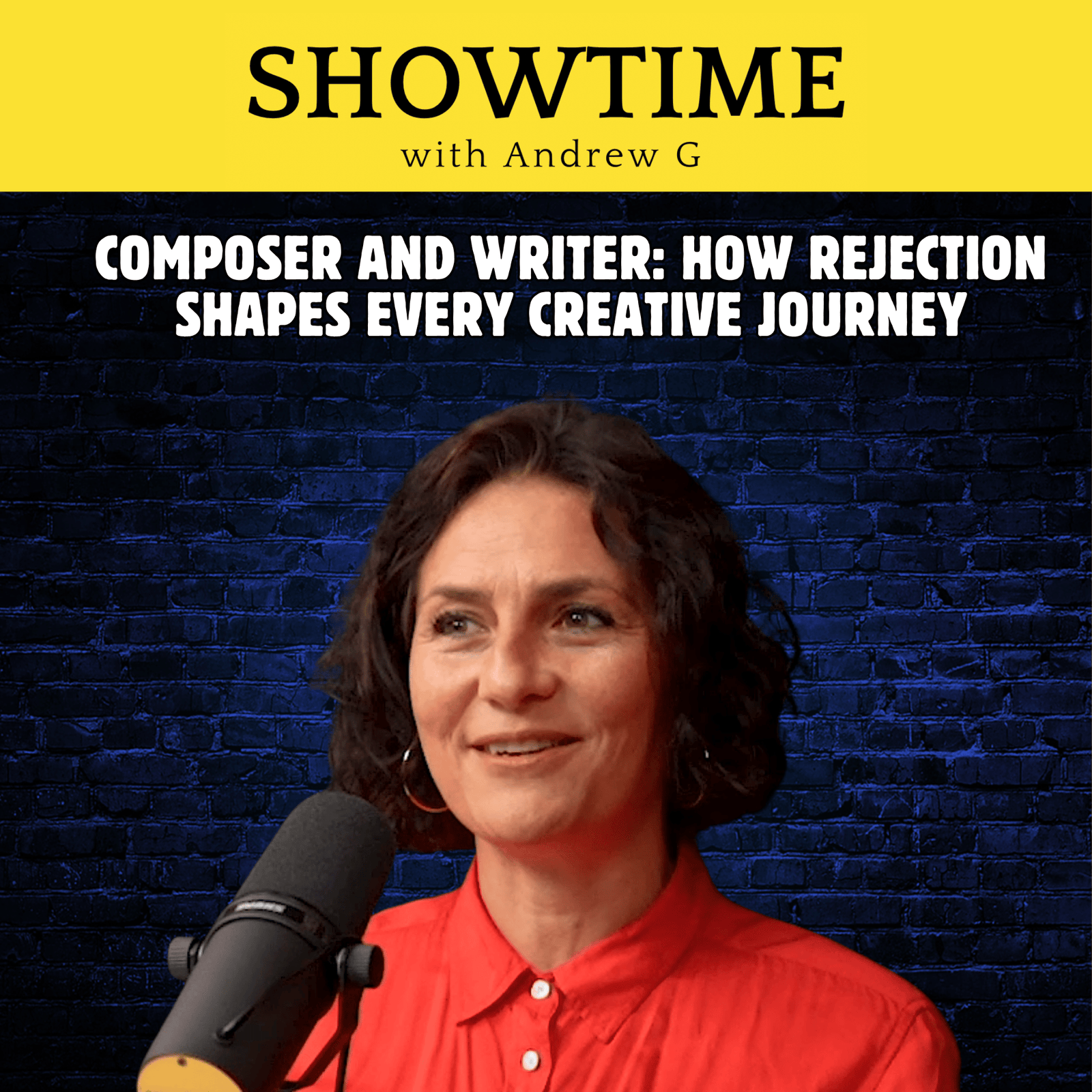
In this episode of Showtime, Andrew G sits down with Monique DiMattina to explore the long and winding creative journey behind Stella, a new Australian musical inspired by the life of Miles Franklin. What begins as a conversation about theatre and music quickly unfolds into something much bigger: a reflection on ambition, resilience, artistic identity, and the emotional cost of dedicating your life to creativity.
For Monique, the path into the arts was never straightforward. Before building a respected career across jazz, folk, classical music, and theatre, she initially studied law, believing music would remain something she simply did “for fun.” But creativity had other plans. Gradually, and almost reluctantly, she found herself being pulled deeper into the world of music and storytelling—a world that felt both exhilarating and painfully difficult.
What makes her story so relatable is the honesty with which she speaks about struggle. Unlike the polished narratives that often surround successful creatives, Monique openly reflects on feeling completely out of place during her early jazz studies. Surrounded by talented musicians who seemed naturally gifted, she describes feeling like the “dumbest kid in the room.” For someone who had always been academically capable, suddenly confronting something she wasn’t immediately good at became deeply confronting.
But that discomfort became part of the process.
Rather than walking away, she stayed with it. Years of practice, frustration, experimentation, and gradual growth eventually allowed her to develop the confidence and technical ability to express what she was hearing creatively. It wasn’t an overnight breakthrough. In fact, she admits it took until her mid-thirties before she truly felt she had found her own artistic voice.
That slow evolution mirrors the story at the heart of Stella itself.
Inspired by the life and legacy of Miles Franklin, the musical explores what it means to dedicate yourself completely to art, even when the world doesn’t make space for you. Franklin’s story is one of ambition, sacrifice, rejection, and perseverance—a woman determined to become a writer in a time when that path was extraordinarily difficult. Through Stella, Monique found herself deeply connected not only to Franklin’s achievements, but to the emotional reality of surviving a creative life.
And in many ways, that connection became personal.
The project itself began almost accidentally. After a conversation with her niece about the lack of Australian-made musicals, Monique casually opened her laptop and started searching for Australian cultural figures worthy of a stage production. Miles Franklin immediately stood out. At first, it was simply an idea. A few songs were written. Small performances followed. Workshops slowly gathered momentum. Years passed. What started as curiosity gradually evolved into a fully realised musical years in the making.
What’s fascinating is how organically the creative process unfolded. There was no grand master plan, no calculated strategy for commercial success. Instead, Stella grew piece by piece through experimentation, collaboration, and instinct. Songs shifted genres. Entire musical numbers were discarded. Ideas were constantly reshaped in service of the emotional truth of the story.
That freedom is something Monique says musical theatre finally gave her after years of working within more rigid musical formats.
As an album artist, she often felt constrained by the expectation that projects needed to fit neatly within a particular style or genre. But theatre allowed her to embrace the full range of sounds she heard creatively. Stella moves through punk rock, bush ballads, jazz, tango, classical arrangements, and theatrical show tunes—all tied together through narrative and emotional continuity rather than stylistic rules.
It’s a reminder that creativity rarely fits inside clean categories.
The conversation also touches on the increasingly difficult realities of being an artist in the digital age. Monique reflects candidly on the exhaustion many creatives feel navigating social media, algorithms, and the constant pressure to remain visible online. While platforms offer connection and exposure, they also create an environment where artists are expected to simultaneously create, market, promote, and perform themselves at all times.
For Monique, that constant visibility often feels draining rather than fulfilling.
Instead, she speaks passionately about the irreplaceable value of live performance and real-world collaboration. The rehearsal rooms. The musicians. The designers. The actors. The audiences gathered together in one physical space. In a world increasingly dominated by screens and fragmented attention, theatre becomes something rare: a genuine shared human experience.
And that sense of connection sits at the centre of everything she creates.
More than anything, Stella becomes a story about legacy—not just the legacy Miles Franklin left behind, but the ongoing importance of preserving cultural stories and artistic voices. Monique expresses frustration that Australia often celebrates sporting heroes more readily than its writers, artists, and creatives. Through the musical, she hopes audiences reconnect not only with Franklin’s story, but with the broader importance of valuing artistic heritage.
But beyond the historical themes, the episode ultimately becomes a much more universal conversation about persistence.
About continuing to create even when the outcome is uncertain. About staying committed through rejection, setbacks, insecurity, and years of slow progress. About trusting the creative instinct even when it refuses to follow a practical or predictable path.
Because sometimes, a creative life isn’t built through sudden breakthroughs or overnight success.
Sometimes, it’s built slowly—through years of showing up, experimenting, failing, learning, collaborating, and continuing anyway.
And sometimes, the most meaningful work comes from finally embracing the thing that kept pulling you back all along.
