

There’s something disarming about hearing a comedian describe their career as an “addiction” rather than a dream. It strips away the polished narrative and replaces it with something far more honest. Not a carefully planned path, but a pull you don’t fully understand, driven by curiosity, instinct, and the need to keep going back on stage.
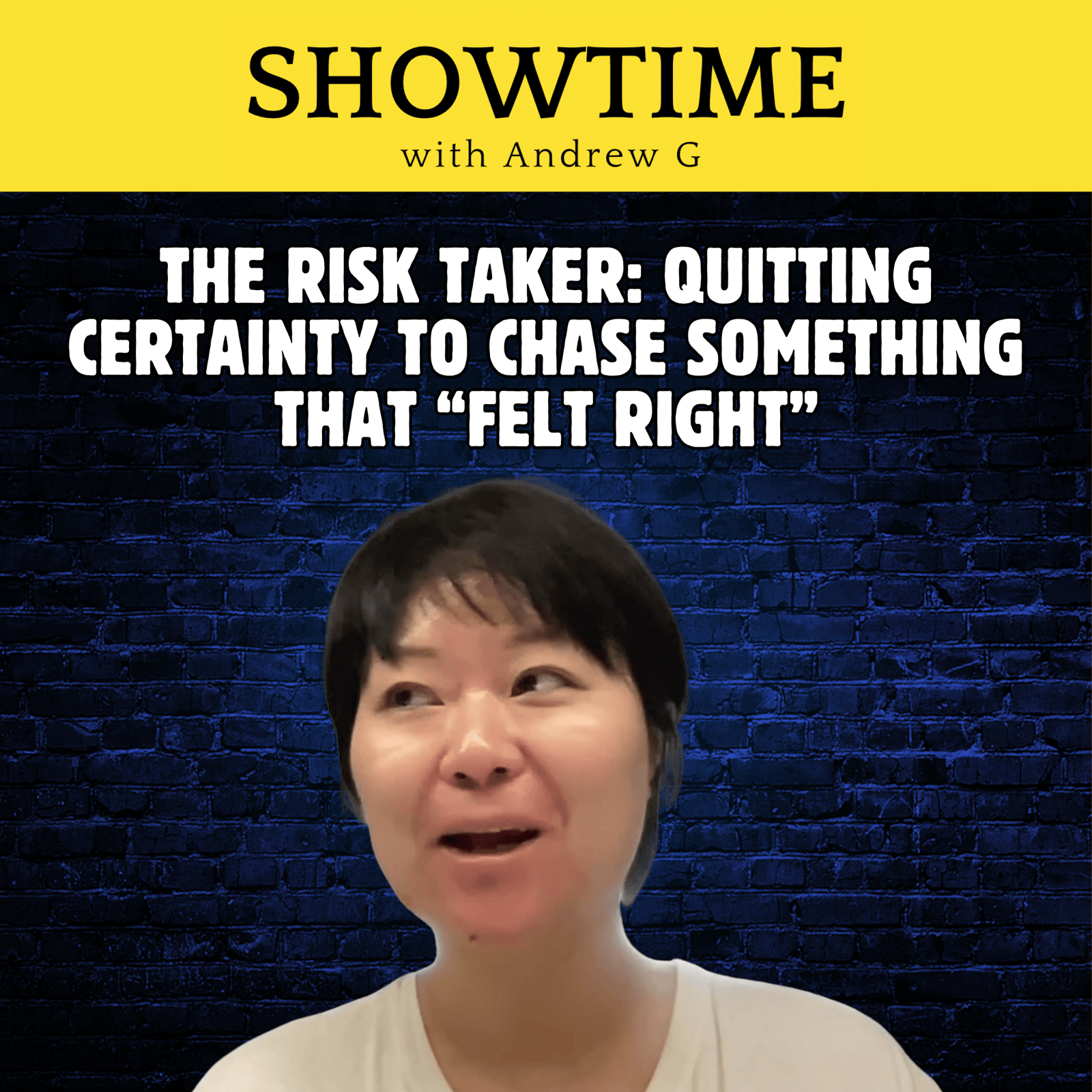
In this episode of Showtime, Andrew G sits down with He Huang, a performer whose journey into comedy feels anything but conventional. From a serious upbringing in China to stumbling into stand-up through a free library class, her story isn’t about chasing a lifelong passion. It’s about discovering something unexpected and choosing to follow it, even when it doesn’t make sense to anyone else.
What stands out immediately is how unintentional it all began. There was no early ambition to become a comedian, no clear sense of identity tied to performance. In fact, she describes herself as someone who seemed serious on the surface, shaped by a structured environment where creative expression wasn’t something actively encouraged. Comedy didn’t emerge from confidence. It emerged from surprise. The first time she made people laugh, it wasn’t planned or understood. It simply happened, and that reaction became something worth exploring.
That sense of discovery continues to define her approach. Rather than trying to fit into a specific mould, she leans into the differences that once made her feel out of place. Growing up in a culturally homogenous environment and later navigating life in completely different parts of the world gave her a perspective that doesn’t neatly align with any single audience. Instead of smoothing that out, she uses it. The misunderstandings, the contrasts, the moments where things don’t quite translate, they become the material.
There’s also a deeper layer to that experience. The feeling of being an outsider isn’t just a theme in her work, it’s a driving force behind it. Not belonging becomes a reason to keep searching, to keep testing, to keep putting herself in new environments. While others might ignore that discomfort, she chose to act on it. Walking away from a stable career, moving across countries, and committing to something as uncertain as comedy wasn’t a strategic decision. It was a response to something that didn’t feel right, and a belief that following that instinct mattered more than staying comfortable.
Like many careers in entertainment, there’s a moment that looks like a breakthrough from the outside. Her appearance on Australia’s Got Talent brought global attention and opened doors that hadn’t existed before. But what’s interesting is how she frames that experience. Not as a defining moment that solved everything, but as a starting point. An opportunity that created momentum, but still required years of work to turn into something sustainable.
That perspective challenges the idea that success comes from a single turning point. Even with viral exposure and growing recognition, the reality remains the same. You still have to build the material, refine the craft, and show up consistently. The difference is that more people are watching, and the expectations are higher.
Her latest show, Timu Joke Factory, reflects that evolution. It moves beyond traditional stand-up into something more narrative and personal, blending humour with deeper storytelling. It’s not just about delivering jokes, but about exploring the process behind them. The idea that a comedian can become a “factory,” constantly producing material, shaping experiences into something digestible, and presenting a version of themselves that fits what the audience expects.
At the same time, there’s an awareness of the tension that creates. The balance between being entertaining and being honest isn’t easy to maintain. Not every audience connects with the same material. Not every story lands the way it’s intended. And not every performance needs to. There’s a level of acceptance in that, an understanding that part of the work is allowing some things to resonate deeply with a few people, rather than trying to appeal to everyone.
What also comes through is her view on the role of comedy itself. There’s no claim that it needs to change the world or carry a larger responsibility. Instead, it reflects what already exists. It highlights shared emotions, common experiences, and the small details that connect people across different backgrounds. The impact comes not from forcing meaning, but from recognising it when it’s already there.
That idea extends to how audiences engage with her work. Some come for the laughs. Others find something more personal in the stories. Both reactions are valid. The performance works on different levels, depending on what the audience brings with them.
At its core, this conversation isn’t just about comedy. It’s about navigating uncertainty and choosing to keep moving forward without a clear roadmap. It’s about trusting instincts over expectations, even when that leads to unpredictable outcomes. And it’s about building something authentic from experiences that don’t always feel like they belong anywhere.
Because sometimes the most interesting paths aren’t the ones you plan.
They’re the ones you discover by accident and decide not to walk away from.
