

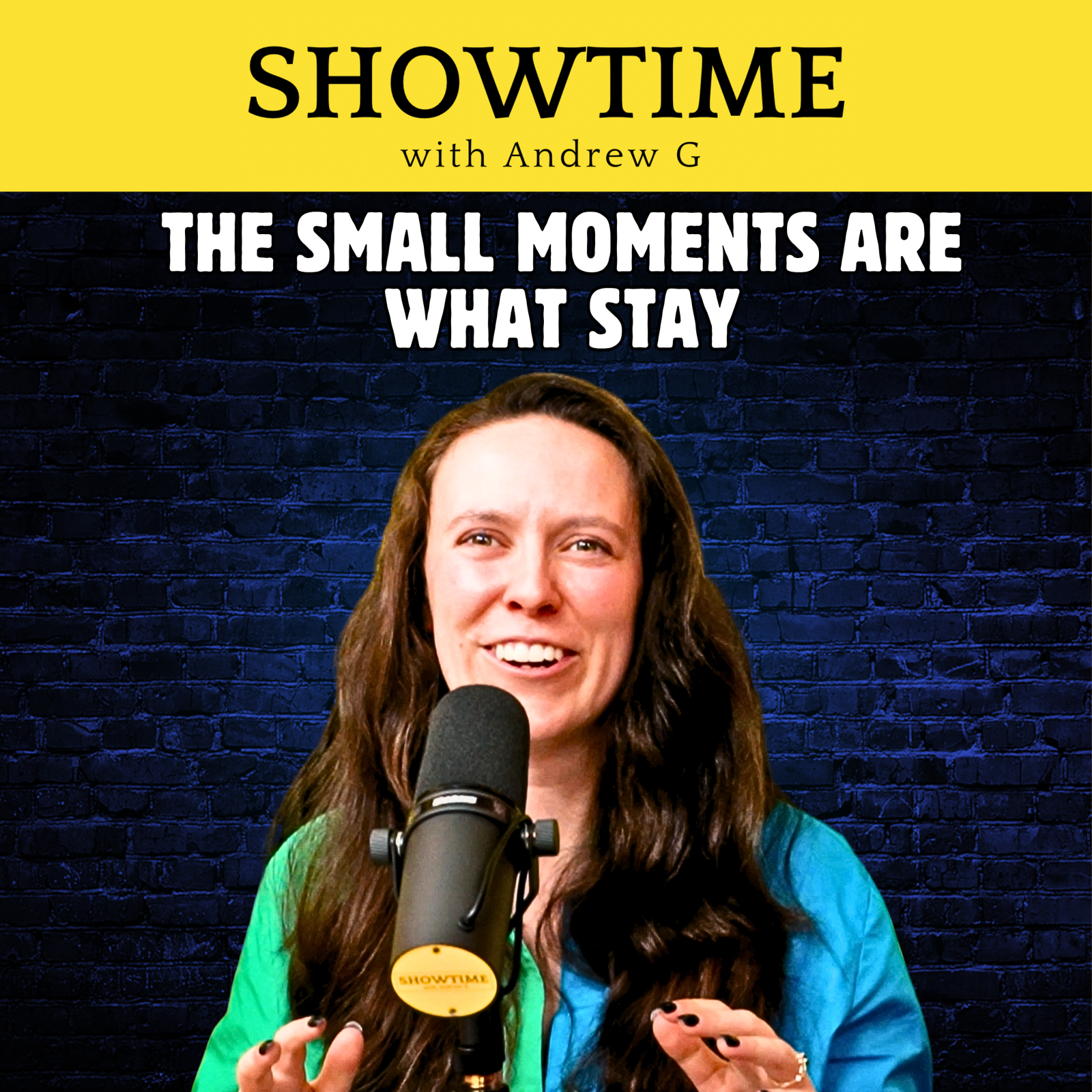
Isabelle Davis has built an entire show around the theory that human beings are naturally hopeful. So Andrew G’s first question in this episode of Showtime cuts straight to the heart of it: is she genuinely that optimistic, or is she trying to convince herself? Isabelle’s answer is refreshingly honest. Probably both.
That candour runs through the whole conversation, recorded ahead of the premiere of The Eternally Hopeful, Isabelle’s debut as a writer, director and producer, in which she also performs as a swing across the show’s cover tracks. Asked whether she’s deliberately arranged things so there’s no one else to blame if something goes wrong, she laughs and admits she’s solely to blame for absolutely everything, mostly because taking on every role herself means her actual cast can be paid more, a very real trade-off in the world of independent theatre.
Isabelle traces the decision to finally write and direct her own work back to what she calls her quarter-life crisis last year. She’d been sitting on projects she was passionate about for years, quietly telling herself to stay in her lane and keep doing what she’d already been doing. Something shifted, and she decided the only way anything would happen was if she made it happen herself, right then. That urgency, paired with a genuine belief that the world could use more stories about hope right now, became the seed of The Eternally Hopeful.
The show’s title, she admits, started as an offhand phrase she used to introduce herself at parties. She’s received her fair share of gentle mockery for it over the years (people telling her she lives in a fairy tale), but rather than shrug it off, she’s decided to own it entirely: choosing to see the world hopefully, she says, is exactly that, a choice, made deliberately and repeatedly, not a naive default setting.
Much of the conversation circles around where that choice actually comes from. Isabelle talks about discovering, only in the past year, a settled sense of who she is, something she describes as a genuinely pleasant surprise after years of quietly comparing herself to her husband, who is roughly a decade older and, in her words, had already worked through many of the same questions she was still wrestling with. That period of self-discovery, she says, has let her relax into her own life rather than needing every answer figured out immediately.
Music has been Isabelle’s way of processing the world since childhood, something she traces back to a freezing, unheated room in a family home that happened to contain a grand piano. As a preteen navigating friendships, school and the general chaos of being twelve, she’d sit at that piano with cold fingers and turn everything she couldn’t say out loud into song, recording tapes she still has today, and still finds a little painful to listen back to. It’s where she first understood that music could say things conversation simply couldn’t.
Growing up between Melbourne and Shanghai (she moved overseas at ten and didn’t return until eighteen) shaped her in ways she’s still unpacking. Coming home to Australia, she was met with a version of tall poppy syndrome she hadn’t encountered growing up internationally, and found herself recalibrating how she expressed confidence so as not to come across as arrogant. She’s candid about spending years afterward trying to work out how to fit in, before eventually landing on something more useful: that being true to who she actually is matters more than folding herself into a mould that was never built for her.
One of the more unexpected threads of the conversation is how directly COVID shaped Isabelle’s path. She graduated from WAAPA’s music theatre program right as the industry shut down entirely, a brutal piece of timing by any measure. But she frames it, true to form, as a blessing in disguise: she’d been quietly dancing through a series of back injuries in her final year, pushing through pain because she wanted so badly to succeed. The forced pause gave her no choice but to properly rehab, and redirected her, she believes, onto the path she was always meant to be on: writing music.
She’s equally thoughtful when the conversation turns to grief. The Eternally Hopeful doesn’t shy away from loss, and Isabelle speaks warmly about her grandmother, about the small, ordinary moments (a birthday dinner, her grandmother dancing to old music) that she knows she’ll carry forward long after they’re gone. She tells a story from her grandfather’s funeral procession, held up unexpectedly by a Jim’s Dog Wash van with nowhere to go, that had the entire grieving family bursting into laughter. It’s the kind of moment she believes life is full of: unexpected, absurd, and somehow still beautiful.
Handing her own songs over to other performers has been one of the more vulnerable parts of the process. Isabelle admits she initially found it exposing, worried that material pulled straight from her own diary wouldn’t land the way she intended. She’s since come to see it as an exercise in trust, watching cast members make creative choices she never would have imagined herself, and finding real joy in surrendering that control. She suspects, in fact, that watching someone else perform her work will be harder on opening night than performing it herself, simply because she won’t have the same command over every note and pause.
Isabelle closes the conversation with one of the show’s central tensions: whether hope is always helpful, or whether it’s sometimes a trap we hold onto for too long. She points to a lyric from the show itself: wishing on a star will only break our hearts, but we are eternally hopeful. It’s a double-edged sword she knows personally, recalling one particularly memorable audition rejection, a genuinely kind email telling her she’d been perfect for the role, only for someone else to have been equally perfect. It stung more than a simple “you weren’t right for this,” she says, but she’s since come to see it as proof that the work itself was respected, even when the outcome wasn’t what she hoped for.
The Eternally Hopeful premieres 22 September at Theatre Works Explosive Factory, St Kilda.
Follow Andrew G: @AndrewGShowtime Follow Showtime: @ShowtimePodcastAU
Follow SHOWTIME for weekly conversations with the people behind the curtain.
