

There’s something quietly powerful about a creative describing their return not as a grand comeback, but as something that simply felt right. It strips away the dramatic narrative of reinvention and replaces it with something far more grounded. Not a calculated move, not a perfectly timed decision, but a pull back toward something familiar—something that never really left, just waited patiently in the background.
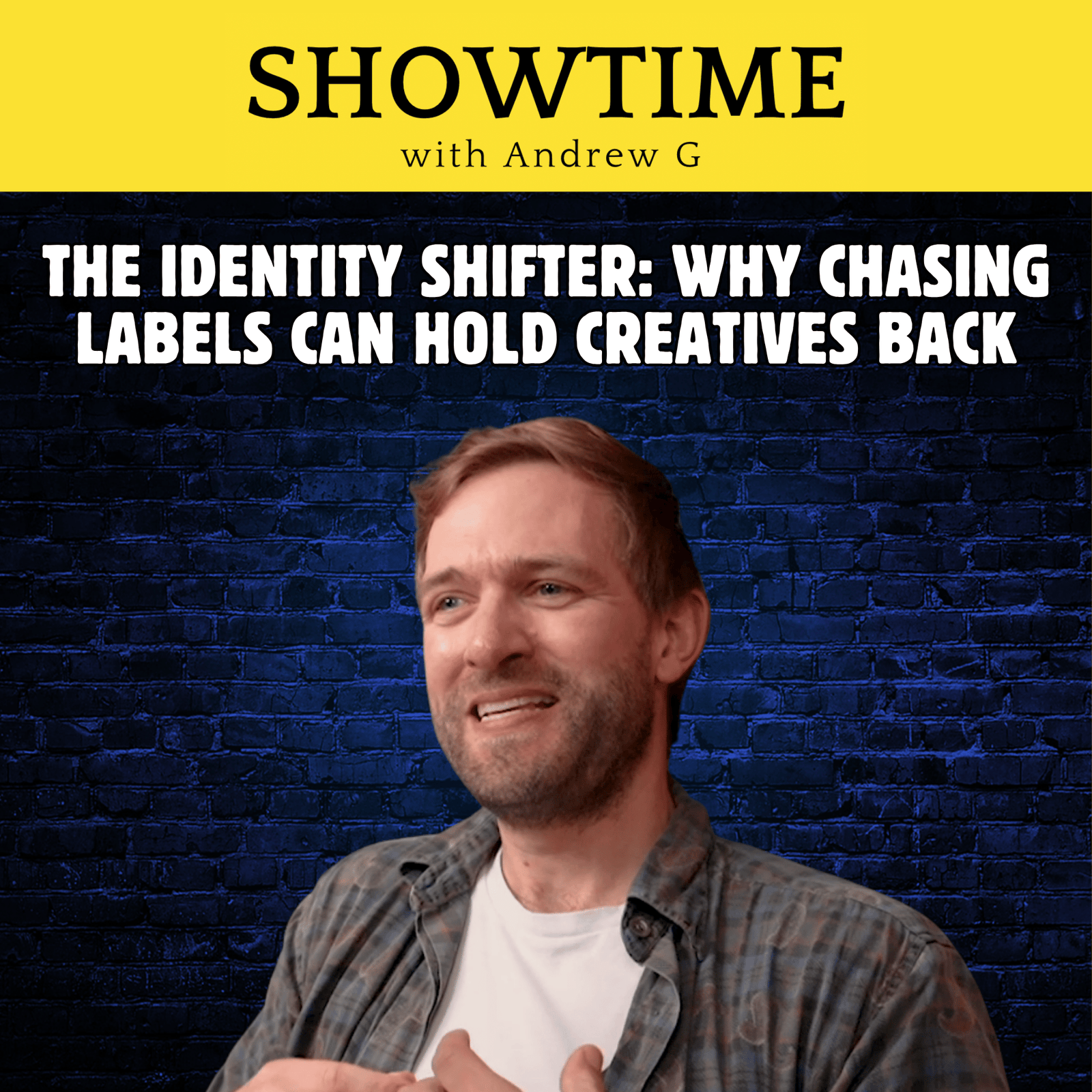
In this episode of Showtime, Andrew G sits down with Mark Taylor, a multi-disciplinary creative whose journey through acting, directing, and music reflects the kind of career that doesn’t follow a straight line. His return to the stage after more than a decade away isn’t framed as a bold declaration. Instead, it’s a natural continuation of a life shaped by storytelling, collaboration, and the need to make people feel something.
What stands out immediately is how early that connection to storytelling began. It wasn’t born from ambition or a desire for recognition, but from imagination. Growing up in a household where stories were created, not just told, Mark was immersed in a world where creativity felt normal. His father would invent bedtime stories, placing Mark and his siblings inside them, turning simple moments into something vivid and personal. That kind of environment doesn’t just entertain a child, it shapes how they see the world. It teaches them that stories are alive, flexible, and deeply human.
But like many creative journeys, it wasn’t all confidence and clarity. There were moments that challenged that early sense of freedom. Experiences that introduced self-consciousness and the awareness of how others perceive you. Those small but significant moments—like being laughed at while performing as a child—leave an imprint. They don’t necessarily stop the journey, but they complicate it. They introduce hesitation where there was once instinct.
What’s interesting is how those experiences didn’t push Mark away from creativity altogether. Instead, they became part of the ongoing negotiation between self-expression and self-doubt. A tension that many creatives understand well. The desire to create, to perform, to connect, constantly balancing against the voice that questions whether it’s worth it.
Over time, his career evolved in ways that weren’t entirely planned. Acting, which had once been his primary focus, slowly took a back seat. Not because of a conscious decision to step away, but because other opportunities began to take shape. Directing, producing, working behind the scenes—these roles filled the space naturally. And without realising it, a decade passed without him actively pursuing acting roles.
That shift highlights something often overlooked in creative careers. The idea that stepping away from one path doesn’t mean abandoning it entirely. Sometimes it just means exploring different parts of the same world. And in doing so, gaining a perspective that wouldn’t have been possible otherwise.
When the opportunity to audition for Once came along, it wasn’t just another role. It was something that resonated on a deeper level. The story, the music, the intimacy of the production—it all aligned with something personal. There was no strategic calculation behind the decision to audition. In fact, there was hesitation. Uncertainty about what it might open up, what it might demand. But underneath that was a quiet certainty that this was something worth stepping toward.
That return to acting wasn’t about proving anything. It wasn’t about reclaiming an identity or making up for lost time. If anything, it reflected a shift away from the need to define identity so rigidly. Mark speaks openly about the tendency for creatives to label themselves—actor, director, musician—as if they need to fit into a single category to be valid. But his experience suggests something different. That creativity doesn’t need to be confined. It can move, evolve, and exist across multiple forms without losing its core.
That perspective becomes even more apparent in how he approaches performance now. After years of working behind the scenes, he returns to the stage with a different understanding of what it takes to bring a production together. There’s a greater appreciation for the collective effort, for the fact that no single person carries the entire weight. It allows him to focus more fully on his role, to be present without the distraction of everything happening around him.
And with that comes a sense of freedom. Not the kind that comes from external success, but the kind that comes from letting go of unnecessary pressure. The need to be perfect, to meet expectations, to constantly evaluate oneself—those things begin to lose their grip. In their place is something simpler. A focus on the moment, on the connection between performers, on the experience being created in real time.
That idea sits at the heart of Once, the production that marks his return. It’s not a traditional musical in the sense that audiences might expect. There’s no clear separation between actors and musicians. The performers are both. The music isn’t something that happens around the story, it is the story. And within that structure, there’s an intimacy that feels rare. A sense that what’s happening on stage is unfolding in a shared space, rather than being presented from a distance.
For Mark, that connection to music is deeply personal. It’s not just a performance tool, but something that has shaped different periods of his life. Moments of uncertainty, of grief, of transition—music has been a constant thread running through them. And returning to a role that integrates that so directly brings those experiences back in a way that feels both challenging and meaningful.
There’s also an acceptance in how he talks about that challenge. A willingness to lean into discomfort rather than avoid it. To recognise that some of the most honest moments in performance come from places that aren’t entirely comfortable. It’s not about forcing emotion, but about allowing it to exist when it naturally surfaces.
At its core, this conversation isn’t just about returning to acting. It’s about rethinking what it means to be a creative. Moving away from rigid definitions and toward something more fluid. Letting experience shape perspective, rather than trying to control the narrative.
Because not every path needs to be clearly mapped out.
Sometimes the most meaningful work comes from stepping back into something you never fully left—and discovering that you’re able to approach it in a completely new way.
