

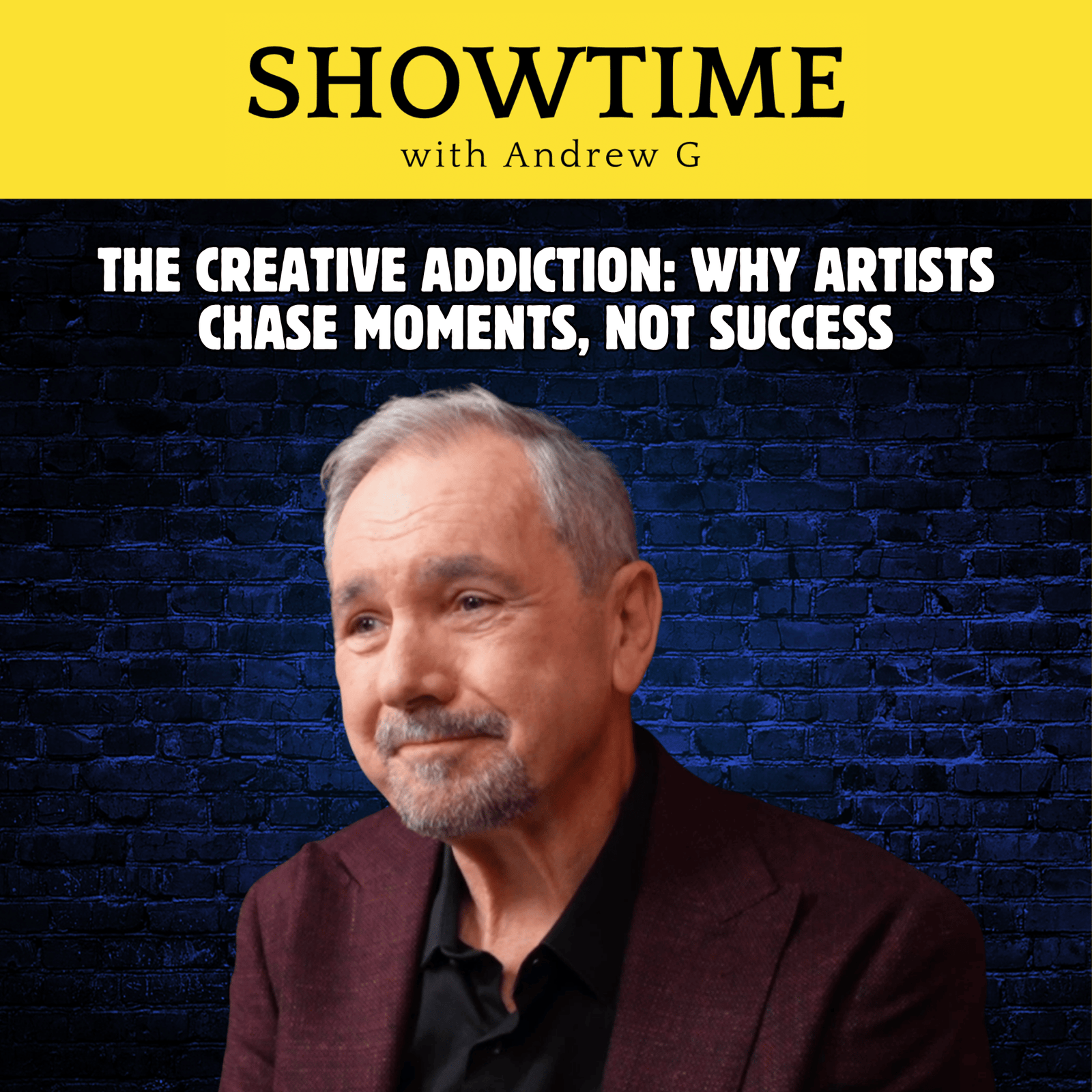
Every so often, a conversation about performing stops being about the industry and starts being about something much more human.
In this episode of Showtime, Andrew G sits down with Alan Fletcher — someone many recognise from Neighbours, but whose story runs far deeper than a single role or even a single medium.
What unfolds isn’t just a reflection on a long and successful career. It’s an honest look at creativity, connection, and the quiet, persistent pull that keeps artists coming back — even when logic might tell them not to.
Because performing isn’t just about being seen.
It’s about feeling something real, and helping others feel it too.
Alan speaks about creativity like it’s something that never really switches off. It’s there in the background, always running, always nudging. A lyric in the middle of the night. A thought that won’t leave you alone. A moment on stage that suddenly clicks into place and gives you a kind of joy that’s hard to explain to anyone outside of it.
That’s the thing that keeps him going. Not recognition. Not even success in the traditional sense. Just that feeling — when something small lands exactly the way it’s meant to.
And it’s interesting, because his path into the industry wasn’t the polished, structured route many would expect. There was no strict reliance on formal training. Instead, it was built on doing the work — over and over again. Performing constantly, learning on the job, surrounding himself with other creatives, and figuring things out in real time.
There’s something refreshing about that. It strips away the idea that there’s only one “right” way to become an artist. Sometimes it’s just about saying yes, showing up, and being willing to learn in public.
Of course, from the outside, a career like his can look effortless. Decades on a show, a steady stream of work, a recognisable face. But he’s quick to point out how much of it comes down to a mix of discipline, timing, and a bit of luck. There’s no clean formula. No guaranteed path.
And maybe that’s what makes it so hard — and so addictive.
Because even after all these years, the core of it hasn’t changed. It still comes back to connection.
He talks about the difference between watching something on a screen and sitting in a theatre. On a screen, there’s distance. You can pause, look away, get distracted. But in a live setting, you’re committed. The performers are right there, in front of you, and anything can happen.
That’s the magic of it.
Not perfection — but the possibility of imperfection. The tiny moments where something almost goes wrong, or shifts unexpectedly, and suddenly everyone in the room is aware that this is happening right now, just once, and never in exactly the same way again.
There’s also something powerful about the shared experience. A room full of people reacting together, feeling the same thing at the same time. You can’t replicate that through a screen, no matter how good the technology gets.
And yet, despite how meaningful it is, the arts often sit in this strange space where they’re undervalued. Treated as something secondary, rather than essential. Alan touches on this with a quiet honesty — the constant challenge of proving the worth of something that, to those inside it, feels undeniably important.
Because when you strip everything back, storytelling is one of the ways we make sense of the world. It’s how we connect, how we process, how we escape, and sometimes how we heal.
And that doesn’t just apply to theatre or television. It shows up in music too. In recent years, Alan has leaned more into songwriting — drawn to genres that prioritise storytelling over spectacle. There’s something more intimate about it. More direct. Just a voice, a story, and an audience willing to listen.
But even then, the real joy isn’t in writing the song. It’s in performing it. In watching how it lands. In feeling an audience slowly lean in, almost without realising it.
That’s the thread that runs through everything he talks about — whether it’s acting, music, or live performance. It’s never just about the work itself. It’s about what happens between people in those moments.
And maybe that’s why artists keep showing up.
Not because it’s easy. Not because it’s stable. But because every now and then, something clicks. A scene, a line, a song, a reaction from the crowd — and for a brief moment, everything feels aligned.
A room full of people.
A story unfolding in real time.
And a connection that reminds you why it all matters.
