

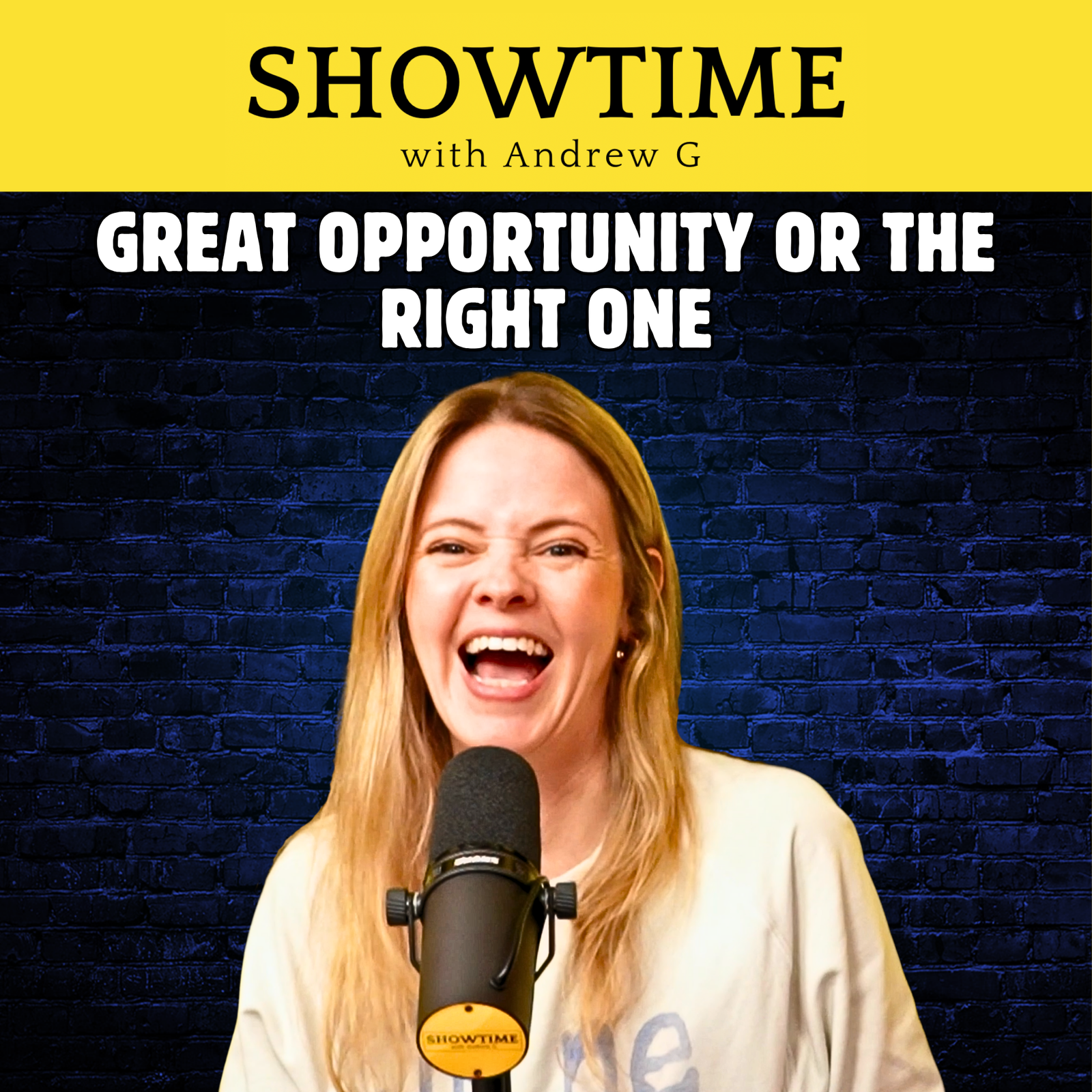
Tegan Higginbotham is very good at saying yes. It’s the nos she finds hard. That one admission sits at the centre of this episode of Showtime, recorded just before the world premiere of her new solo show Follow That Turtle!, a story about the opportunity she said yes to when every instinct told her not to.
It’s a show that almost didn’t exist. After more than 20 years across stage, television and film, Tegan had decided stand-up was behind her for good. She describes the break as a genuine heartbreak: she fell out of love with it, couldn’t bring herself to watch other comedians online, and drifted from friends because it all felt too close. The moment she remembers most clearly is backstage at a St Kilda gig, listening to Tom Gleeson and Dilruk talk about how they’d perform every night of the week if they could. She stood there thinking she wanted to go home.
What eventually pulled her back was purpose. Tegan is clear that her art has to have value, even if that value is simply cheering a room up. She’s made shows with more status that left her feeling empty, and tiny projects that fed her like fuel. “I’m a working-class girl,” she says. “I’m about the work.”
That practical streak runs through her whole career. Her first solo festival show, Million Dollar Tegan, came from studying a crowded Melbourne comedy scene and asking how to stand out. Back then, few women were talking about sport with a comedic lens, so she trained for a real pro-rules boxing match, three rounds with no headgear, at a gym in South Melbourne, and built the show around it. Her follow-up involved cold-calling AFL star Brendan Fevola to say she was making a show about him and ask if he fancied a coffee. Both gambles paid off, and the first earned her a Best Newcomer nomination at the Melbourne International Comedy Festival, in a year that also included Ronnie Chieng and Steen Raskopoulos.
She’s cheerfully honest about how naive she once was. Her first Adelaide Fringe season landed an 11pm slot during a brutal heatwave, which turned out to be the best time in the city, and she concluded comedy was easy money. She’d also mapped out her ideal career by following Scarlett Johansson’s timeline, ticking off each milestone as she went. It didn’t quite work out that way, she says dryly. It has been harder and slower than she expected.
Underneath the drive is a self-described extroverted introvert: a former primary school class clown who finds socialising stressful and learned early that comedy was a way to get the laugh and duck out. Her first stand-up gig was a disaster. She hadn’t written jokes so much as a monologue full of feelings, and her hands shook so badly she couldn’t take the mic out of the stand. The promoter, Janet McLeod, saw something in it anyway.
That tension between instinct and ambition is exactly what Follow That Turtle! explores. Without spoiling the story, Tegan says she knew in her gut, even before the formal offer arrived, that the opportunity was wrong. She could feel it in her body. But the angel and the devil on her shoulders were both talking, and the one shouting “say yes” was louder. Part of the reason, she says, is that she was raised to be polite, and politeness can override better instincts, particularly for women. She points to a scene in The Girl with the Dragon Tattoo where a character walks into danger because he doesn’t want to be rude.
Working through it hasn’t been tidy. She spent a writing residency in the Dandenong Ranges taking the whole experience apart, felt she’d come out the other side, and then fell straight back into old habits the first time she was challenged. Her gentle verdict is that change takes time, and that you can say no and still be nice. A friend who is brilliant at it is teaching her how. Quitting is a harder habit to break: in her head, it’s still tied to failure.
Her ambition, she acknowledges, is both the reason she has survived in this industry and the thing that can get her into trouble. She points to Gnomes, the Stan Original horror-comedy, as proof of the upside: a project that seemed impossible to get made until she and the team behind it decided to keep swinging with bold, ambitious scripts. These days, she runs opportunities through a different filter. It might be a great project, but is it the great project for her? Will it feel purposeful? Does she respect the team, and do they align morally? She also knows she doesn’t create well from tension, and that there’s a difference between that and healthy creative tension.
Some of the gentlest moments are about forgiveness. She has stopped beating herself up for finding parties hard, even though comedy pushes you to be the life of one. She still believes socialising is part of the job and that people are worth the effort, but accepts it’s a challenge for her, and that’s okay.
Her take on tall poppy syndrome is that it’s less an industry problem than an Australian cultural one. We’re raised to admire the working-class larrikin underdog, so success at the glittering top creates mixed feelings. Within the industry, she says, people mostly want each other to do well, because a hit show means more shows. She’s also clear-eyed about why live performance matters more than ever: when we’re all reading different news on separate screens, a room full of people watching the same thing and chatting about it afterwards has growing value.
One of the quiet joys of returning to stand-up after roughly eight years away is that nobody asks her about being a female comedian any more. For years she was “the female” on a lineup or a panel rather than just Tegan, a label she found reductive and othering. She’s glad younger comedians can carve out their own voices without that wall, and that some of her old audience has come back.
Looking ahead, what she wants from the next 20 years is consistency. She’d love to know in October that she has a writing job lined up for the same month next year, so she could book a trip and write overseas. In the meantime, her next show might be about Mount Everest and K2, and why humans send themselves up mountains. She doesn’t think it’s funny yet, but she’s fascinated.
Follow That Turtle! plays at Theory Bar as part of the Melbourne Fringe Festival from 9 to 18 October.
Follow That Turtle! tickets: melbournefringe.com.au
Follow Andrew G: @AndrewGShowtime Follow Showtime: @ShowtimePodcastAU
Follow SHOWTIME for weekly conversations with the people behind the curtain.
